Why Lajpat Nagar Needs a Better Conversation About Mental Health
Lajpat Nagar is one of the busiest, most energetic neighbourhoods in South Delhi. Its markets never seem to slow down, its lanes are full of families who have lived here for generations, and its residents tend to be resourceful, hard-working and fiercely loyal to the people they love. It is also a place where the pace of life leaves very little room to stop and ask a simple question: how am I actually doing?
Many people here carry real emotional weight and say nothing about it. The shopkeeper who has not slept properly in months, the homemaker managing three generations under one roof, the young professional commuting to Gurgaon and Noida every day, the student preparing for a competitive exam while the whole family watches: all of them are under pressure, and most of them have been taught to manage it quietly. If you are searching for a therapist in Lajpat Nagar, you have already taken the hardest step, which is admitting that quiet endurance is no longer working.
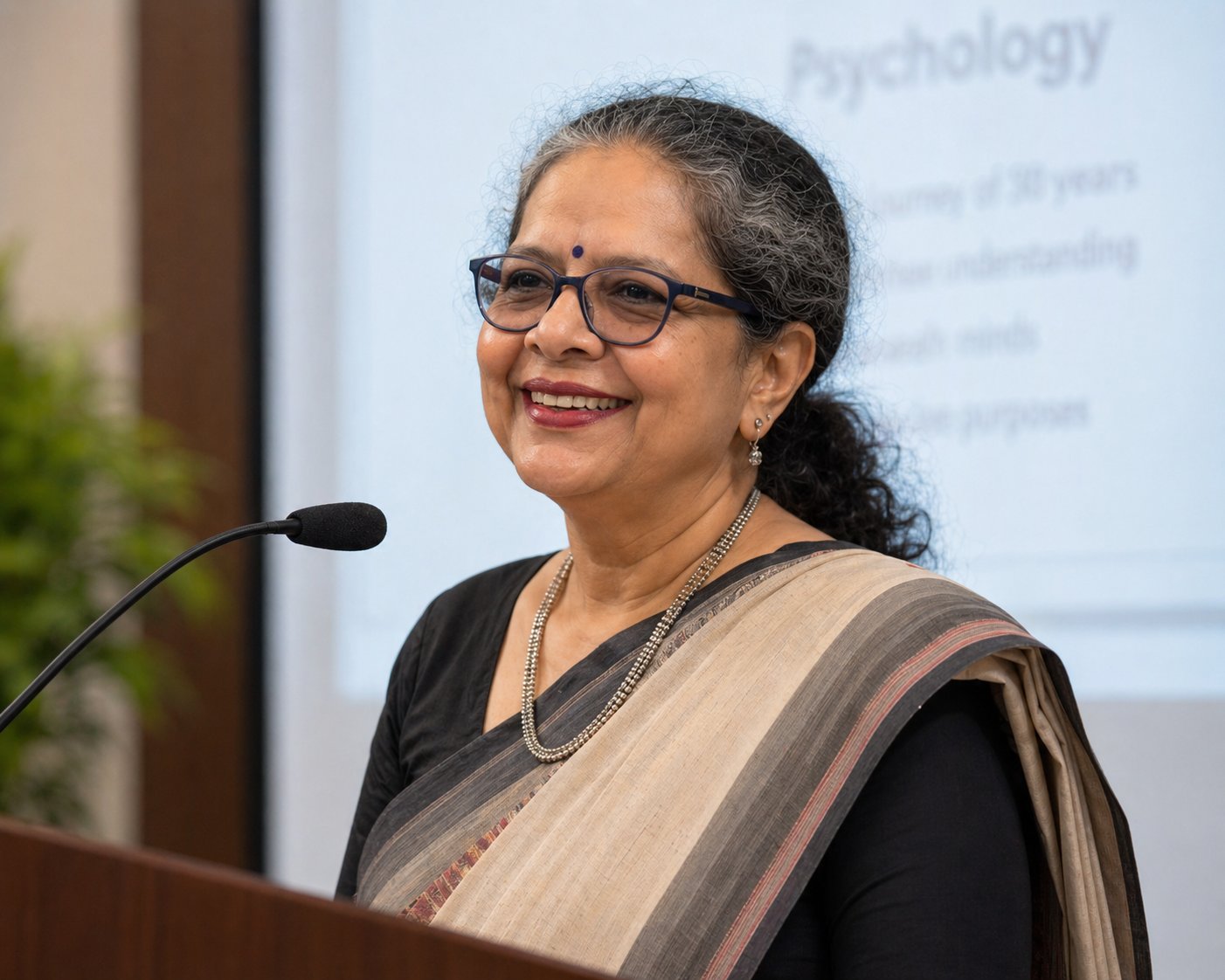
Anuradha Banerji Sarkar has been seeing clients from Lajpat Nagar and the surrounding colonies since 1989. With a Master's degree in Psychology from Kolkata University and certification as a clinical hypnotherapist, she has spent more than thirty-five years helping people in South Delhi understand and resolve the patterns that keep them stuck. This guide explains what support is available, what a first session looks like, and how to decide whether therapy is right for you.
Common Reasons People From Lajpat Nagar Seek Therapy
People rarely walk into therapy because of a single dramatic event. More often, a quiet accumulation of strain reaches a tipping point. The concerns that bring clients from this part of Delhi are varied, but several come up again and again.
Anxiety and constant worry. A mind that cannot switch off, a racing heart before meetings or family gatherings, a sense that something is about to go wrong even when nothing is. Sleep difficulties. Lying awake at two in the morning replaying the day, or waking at dawn with a knot in the stomach. Stress that shows up in the body. Recurrent headaches, acidity, tight shoulders, back pain and fatigue that doctors cannot fully explain are often the body's way of expressing emotional strain that has nowhere else to go.
Family and relationship pressure. Joint-family dynamics, expectations around marriage and career, conflict between spouses, or the silent distance that grows between parents and teenage children. Grief and loss. The death of a parent or spouse, the end of a relationship, or a business setback that feels like a loss of identity. Habits that feel impossible to break. Smoking, tobacco, excessive drinking, anger outbursts or compulsive behaviours that the person wants to stop but cannot stop through willpower alone.
None of these is a sign of weakness. They are human responses to real circumstances, and they respond well to skilled, patient, confidential support.
The Approaches Available at the South Delhi Practice
Anuradha does not apply a single method to every person. After listening carefully to your situation in the first session, she recommends the approach, or the combination of approaches, most likely to help you.
Counselling offers a safe, confidential space to talk through what is troubling you with someone who listens without judgement. For many people, simply being heard fully for the first time is a significant relief and a good starting point. Cognitive Behavioural Therapy (CBT) is a structured, practical approach that helps you identify unhelpful thought patterns and replace them with more balanced ones. It is well suited to anxiety, low mood and overthinking, and you leave each session with tools you can use in daily life.
Clinical hypnotherapy works at the level of the subconscious mind, where many habits, fears and automatic reactions originate. It is not stage hypnosis and you are never out of control; you remain aware and calm throughout. It is particularly effective for anxiety, sleep problems, stress-related physical symptoms, and habits such as smoking. Past life regression (PLR) is an exploratory therapeutic technique used when a pattern, fear or relationship difficulty seems to have no explanation in your present-day history. Clients often find that it brings clarity and a sense of release.
What Happens in a First Session
The first session is unhurried. Anuradha begins by asking what brought you in and what you hope will change. There is no checklist to complete and no pressure to share anything you are not ready to. She listens, asks gentle clarifying questions and gradually builds a picture of what is going on and what has already been tried.
By the end of the hour you will have a clear understanding of what she thinks is happening, which approach she recommends, and roughly how many sessions it may take. Some people feel meaningful change within a few sessions; others, particularly those working through long-standing patterns or grief, benefit from a longer course. She will always be honest with you about this. Everything discussed is held in strict professional confidentiality, and nothing is shared with anyone without your written consent.
Sessions are available in English, Hindi and Bengali, so you can express yourself in the language that feels most natural. That matters more than most people expect, because emotions are often easier to describe in the language you grew up with.
Getting There From Lajpat Nagar, and Online Options
The practice is in South Delhi and is easily reachable from Lajpat Nagar, South Extension, Defence Colony, Andrews Ganj, Kailash Colony and neighbouring areas. If your day is already stretched, online sessions by secure video call are equally effective and save you the travel time entirely. Many clients alternate between in-person and online sessions depending on their schedule, and the quality of the work is the same.
The clinic is open Monday to Saturday, 10 AM to 7 PM, with Sunday sessions available by prior appointment. Payment can be made by cash, UPI or bank transfer.
Fees and How to Book
The fee is Rs.2,000 per 60-minute session for clients in India, and US$40 per hour for international clients. There are no hidden charges. To book, use the WhatsApp or email buttons on this page. Anuradha or her team respond within 24 hours, and you can ask any questions about the process before you commit to a session.
If you have been putting this off, consider this: you would not hesitate to see a doctor for a persistent physical symptom. Your mind deserves the same attention. A single conversation can be the start of feeling genuinely different.