Three decades of clinical practice at her South Delhi consulting room have given Anuradha Banerji Sarkar something few therapists accumulate: a working intimacy with the extraordinary range of human experience that arrives, unannounced, through the door. Of all the modalities she has integrated into her practice since 1989, past life regression therapy generates the most questions — and the most quietly astonishing outcomes. This guide aims to answer those questions honestly, clinically, and without the mystification that too often surrounds this subject.
If you are based in Saket, Greater Kailash, Defence Colony, Hauz Khas, Vasant Vihar, or anywhere across South Delhi and NCR — this is the most complete account of PLR therapy available locally, written by the practitioner who will conduct your session.
Defining Past Life Regression — Precisely
Past life regression is a guided hypnotherapeutic process. The therapist brings the client into a deeply relaxed, inwardly focused state — the hypnotic state — and then facilitates exploration of material that the client's unconscious mind presents, material that appears to originate outside the boundaries of the current lifetime. That material arrives in many forms: as visual scenes with specific geographic and historical detail; as physical sensations — warmth, cold, pressure — in specific parts of the body; as emotions with a sudden quality of recognition; as names, languages, or locations the client has no conscious connection to; or sometimes simply as a quality of clear inner knowing that carries its own certainty.
The therapeutic claim of PLR rests on observation, not dogma. Anuradha Banerji Sarkar makes no metaphysical assertion about what these experiences represent at the level of ultimate reality. What she observes — what she has observed across thousands of sessions spanning 35 years — is their therapeutic consequence. People arrive carrying patterns that have resisted every other approach and leave, after one or several sessions, changed at a level they had stopped expecting change to reach. The phobia that has been present since earliest memory. The nightmare that has repeated for twenty years. The relationship dynamic that every conscious effort has failed to alter. These patterns shift. Consistently. Reliably. That clinical reality is the foundation of her PLR practice.
The Research Trail — What Has Been Documented
PLR's clinical history is longer than most people realise. Serious academic interest began in the mid-twentieth century, but the work that most influenced the therapeutic mainstream was that of Dr. Brian Weiss — a Yale School of Medicine and Columbia University-trained psychiatrist who documented, somewhat against his own expectations, that a patient's severe anxiety and phobias resolved completely through regression sessions containing apparently verifiable historical information she had no normal means of accessing. His 1988 book became a landmark, not because it settled any metaphysical debate but because it presented credible clinical evidence that demanded serious engagement.
More rigorous still, methodologically, is the multi-decade research programme conducted by Dr. Ian Stevenson at the University of Virginia, now continued by Dr. Jim Tucker. Stevenson spent his career documenting children's spontaneous past-life memories — cases in which young children, before any possibility of cultural priming, described previous lives in specific and independently verifiable detail. His database runs to thousands of cases across multiple cultures and continents. His methodology set a standard of rigour that even critical reviewers have respected.
Where does that leave the metaphysical question? Genuinely open, in Anuradha Banerji Sarkar's assessment. She does not require clients to close it. What matters clinically is not the answer to that question but the therapeutic outcome of the work — and that outcome is, in her experience, consistent and substantial.
Inside a PLR Session — What Actually Happens
A PLR session at Anuradha Banerji Sarkar's South Delhi practice begins with a structured clinical intake — typically twenty-five to thirty minutes of attentive listening. She wants to understand the specific nature of what has brought you to PLR: which presenting concerns, what has already been tried, what you are genuinely hoping the work might address. This is not a formality. The intake conversation shapes everything that follows — the depth of the induction, the specific therapeutic orientation of the session, and the frame through which she will hold the integration conversation afterwards.
She also uses this time to establish what she describes as the therapeutic container — the quality of relationship between client and practitioner that makes it safe to encounter material that may be surprising, emotionally intense, or disorienting. The therapist in a PLR session is not a passive technician running a protocol. She is an active, skilled, fully present witness who holds the psychological space throughout, monitoring continuously, providing grounding when needed, and directing the therapeutic inquiry with precision.
The induction — bringing the client into the hypnotic state — takes fifteen to twenty minutes. Anuradha Banerji Sarkar uses a personally developed combination of progressive somatic relaxation, guided imagery, and concentrated attention techniques refined over decades. The resulting state is consistently described by clients as a heightened inward attentiveness — not sleep, not unconsciousness, but something more focused and more open than ordinary waking awareness. You remain fully in control. You can speak, move, and choose to end the session at any point.
The regression itself is guided through open questions. She never suggests content. What arises is always genuinely the client's own material, emerging at the pace and in the form the client's own unconscious determines is appropriate. Sessions vary enormously: some are vivid and visually detailed, with multiple scenes and clear narrative progression; others are primarily felt — emotional and somatic rather than visual; others are characterised by a quality of simple, certain recognition. All are therapeutically valid. All are worked with.
The integration conversation — twenty to thirty minutes — closes each session. This is where the experience is translated into therapeutic meaning. What connection exists between what emerged and the concerns that brought you here? What appears to need completion, release, or acknowledgement? What does the experience ask of you now? This is precise, thoughtful clinical work, and it is often where the deepest consolidation of the session's therapeutic gain happens.
The Presentations That Respond Most Clearly
After 35 years of clinical PLR work in South Delhi, Anuradha Banerji Sarkar can identify the presentations that tend to respond most clearly and most reliably to regression work.
Phobias with no traceable current-life origin occupy a special place in PLR practice. The water phobia of a person who has never had a frightening aquatic experience. The crushing claustrophobia of someone who grew up in open spaces. The specific terror of heights in a client who otherwise shows no anxious characteristics. These phobias resist cognitive and exposure-based approaches because their source is not in the current-life memory those approaches can access. Regression frequently reveals what appears to be the originating experience — and its therapeutic resolution is correspondingly direct.
Recurring nightmares with consistent narrative content are another primary indicator. The same setting, the same figures, the same unresolved ending — repeated over years or decades. This consistency points to material the unconscious is attempting to process but cannot complete through ordinary dream work. PLR provides the specific therapeutic conditions for that completion.
Relationship patterns resistant to conscious change — the persistent replication of the same dynamic, the inexplicable intensity of certain connections, the quality of recognition in a new relationship that should feel like a stranger — all suggest soul-level connections that regression work can address at their apparent root.
Chronic physical symptoms without medical explanation — pain or tension localised in specific areas that no investigation has explained — sometimes find their origin in PLR sessions, and the resolution of that origin material produces genuine physical relief.
Existential questions about purpose and the soul's continuity — sincere inquiry into why one is here, what follows this life, what the pattern of one's experiences means in a larger context — are questions PLR addresses experientially rather than philosophically. For many clients, this experiential address is the only one that produces genuine satisfaction.
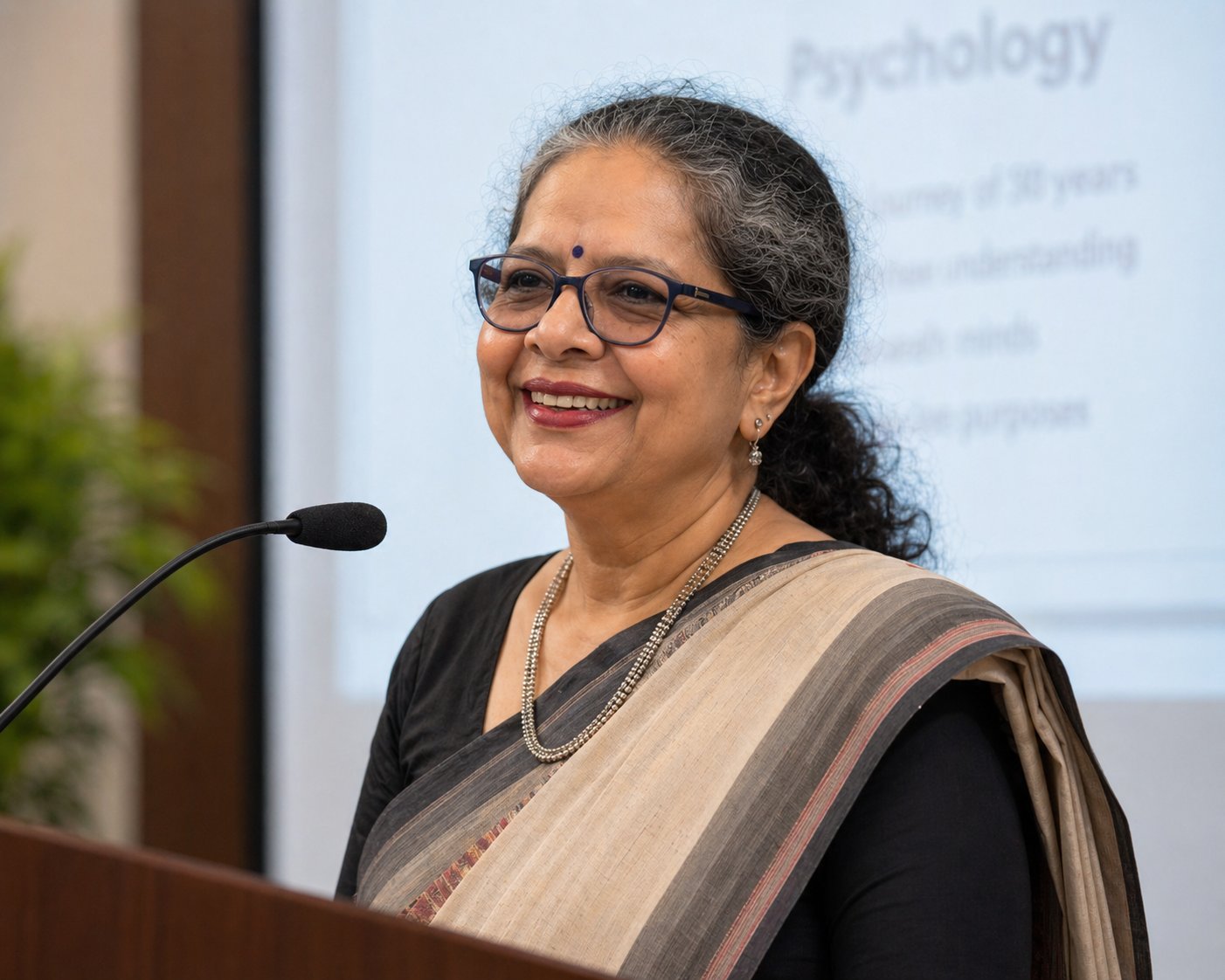
South Delhi and NCR — The Cultural Context
Delhi provides a particular environment for PLR work. The city's dominant philosophical traditions — Hindu, Jain, Buddhist — hold reincarnation not as speculation but as cosmological fact. For clients from families with deep roots in these traditions, PLR requires no suspension of belief, no conceptual adjustment. It is, for them, a therapeutic operationalisation of what they have always understood to be the structure of existence. The grandmother from Lajpat Nagar who has carried a specific fear since childhood needs no convincing that previous-lifetime experience might explain it. She came to PLR curious, not sceptical.
The cosmopolitan, internationally educated professional communities of GK, Vasant Vihar, and Saket bring a different orientation — more empirical, more sceptical, more demanding of coherent mechanism. And these clients, interestingly, often produce the most richly detailed regression material. The disciplined inner attention that analytical training develops translates directly into clarity and precision in the regression state. They arrive doubting and leave having experienced something they cannot explain away — and that they find, often quietly, has answered something they had long been asking.
Anuradha Banerji Sarkar's practice is accessible from across South Delhi: Saket, GK I and II, Defence Colony, Lajpat Nagar, Malviya Nagar, Hauz Khas, Vasant Vihar, Green Park, South Extension, Safdarjung. Online sessions serve NCR clients in Gurgaon, Noida, Faridabad, and Ghaziabad — and clients across India and internationally — at the same depth and the same rate.
Practical Details — Sessions, Cost, Language
The fee for PLR at Anuradha Banerji Sarkar's South Delhi practice is Rs.2,000 per session for clients in India (US$40 per hour for international clients). A first PLR session runs 75 to 90 minutes to allow adequate time for the intake conversation, the regression itself, and the integration discussion without any element being abbreviated. Subsequent sessions are typically 60 to 75 minutes depending on the material and the therapeutic direction. Online sessions run identically and at the same rate.
How many sessions are appropriate is determined by the presenting concern and the client's own readiness. Single sessions produce significant and lasting resolution for some clients — particularly for discrete presenting concerns like a specific phobia or a recurring nightmare. For broader patterns with multiple dimensions, or for clients engaged in an ongoing spiritual and psychological development journey, three to six sessions across several months allows for progressively deeper and more comprehensive work. The pace is always collaborative. There is no fixed protocol and no pressure.
Sessions are available in English, Hindi, and Bengali. Anuradha Banerji Sarkar moves fluidly between languages and can work bilingually within a single session where that serves the client's most authentic expression.
PLR with Children — A Delicate and Rewarding Application
Children between roughly three and eight years of age are sometimes the most natural PLR subjects, precisely because the psychological processes that adults must deliberately access in the hypnotic state — imagination, associative openness, reduced critical filtering — are simply the habitual state of early childhood consciousness. Children sometimes report what appear to be past-life memories spontaneously, without any therapeutic prompting: specific previous family names, geographic locations, occupational details, causes of death — described with the matter-of-fact confidence of personal recollection rather than the excitement of fantasy.
When parents from South Delhi bring children with unexplained phobias, persistent sleep disturbances, or specific recurring distress that appears disproportionate to any identifiable current-life cause, Anuradha Banerji Sarkar approaches the work with particular gentleness. The induction is shorter, the language simpler, the session paced entirely by the child's own comfort and engagement. Parental presence is available throughout if the child wishes it. Outcomes in this age group are often striking — the resolution of a phobia that has existed since before the child could have formed a relevant experiential memory, described in simple and certain terms by the child, is one of the most clinically compelling phenomena in the entire range of PLR practice.
Relationship Healing Through PLR
Among the most profound applications of past life regression in Anuradha Banerji Sarkar's South Delhi practice is its use in healing relationship patterns that carry an inexplicable intensity or familiarity. The relationship that feels too important, too conflicted, too loaded with significance that no current-life history can account for. The person you met five minutes ago and experienced with the immediate certainty of having always known. The family dynamic that feels scripted — as if everyone already knows their lines from a rehearsal no one remembers attending.
PLR sessions exploring these patterns frequently surface apparent previous-lifetime connections with the specific individuals involved. What is therapeutically significant is not the metaphysical status of these apparent connections but their functional consequence: when the specific history of a previous-lifetime relationship is encountered and therapeutically worked with, the current-lifetime relationship changes. Old charges discharge. Old patterns release. The relationship becomes available to develop differently. Anuradha Banerji Sarkar has seen this pattern of resolution too many times and in too many different people to attribute it to coincidence or to the power of suggestion alone.
After the Session — Integration and Continuing Support
A PLR session's therapeutic work does not conclude when the client leaves the consulting room. The material that surfaces in regression continues to integrate across the days and weeks that follow, often appearing in dreams, in shifts in emotional response to familiar situations, in new perceptions of longstanding relationships, in a quality of greater inner spaciousness that clients find difficult to account for but consistently report. Anuradha Banerji Sarkar supports this ongoing integration through post-session check-in contact, guidance on specific journalling or reflective practices suited to what emerged, and — where appropriate — coordination of the PLR work with other therapeutic modalities she is using with the same client.
The First Step
PLR requires nothing of you in advance except a genuine willingness to see what arises. No beliefs, no preparation, no prior experience with hypnotherapy or meditation. The contact buttons on this page reach Anuradha Banerji Sarkar directly. She responds within 24 hours. The clinic is open Monday through Saturday, 10 AM to 7 PM, with Sunday sessions available by prior arrangement. Rs.2,000 per session for clients in India (US$40 per hour for international clients). In-person in South Delhi and online everywhere.